How does a plastic film agglomerator machine Work?
A plastic film agglomerator machine processes soft thermoplastic waste through high-speed cutting, friction heating, and rapid cooling. Unlike a conventional plastic crusher that mainly reduces material size, a plastic agglomerator also uses friction heat to bring the plastic into a semi-plasticized state and form it into small, dense agglomerated pieces.
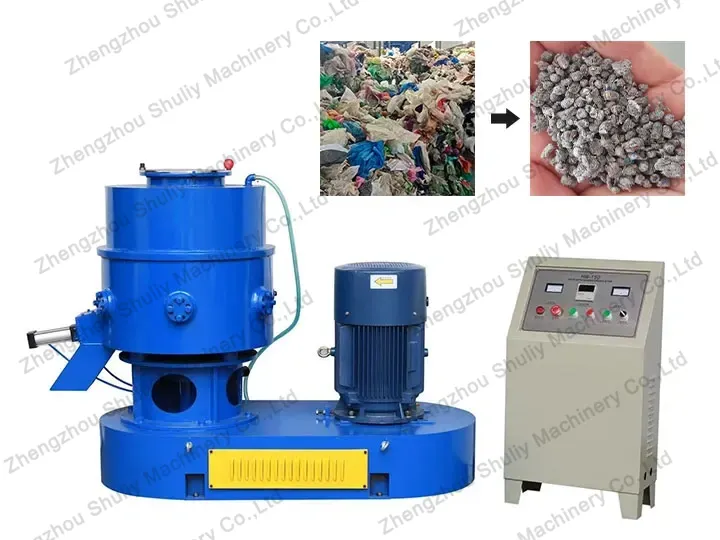
How does a plastic agglomerator work?
The working process can be understood in three main stages: crushing and friction heating, rapid cooling, and final agglomeration.
1. Plastic waste is cut and heated by friction
Plastic waste enters the working chamber, where moving and fixed knives cut and tear the material at high speed.
The cutting action creates continuous friction between the plastic material, knives, and chamber. This friction generates heat quickly. As the temperature of the plastic rises, the material gradually becomes soft and reaches a semi-plasticized condition.
At this stage, small pieces of plastic begin to stick together. This process is especially useful for light and flexible materials such as plastic film and bags, which are difficult to handle as loose waste because of their low bulk density.
2. Cold water quickly removes surface heat
When the plastic is close to forming larger clumps, cold water is introduced into the chamber.
The water contacts the hot plastic and vaporizes rapidly. This takes away heat from the material surface and prevents the plastic from becoming excessively melted. The rapid temperature change helps the softened plastic form small, irregular, agglomerated pieces.
3. The material is further cut and discharged
Not all of the material clumps at the same time. Plastic that has not yet formed agglomerates continues moving inside the chamber.
The moving knives and fixed knives repeatedly cut the material into smaller irregular particles while the material is being mixed and circulated. Once the material reaches the required processing condition, it is discharged through the outlet.
The result is a more compact plastic material that can be further processed or reused according to the recycling process.
What happens inside the agglomerator chamber?
The chamber is where the main processing takes place. A typical plastic agglomerator uses both moving knives and fixed knives to create cutting and friction.
For example, the plastic film agglomerator machine configuration can include 6 fixed knives and 2 moving knives, with the spindle operating at about 660 rpm.
The chamber can also be made from 304 stainless steel, which provides a suitable working surface for processing plastic materials.
The combination of knife movement, material circulation, friction, and cooling allows the machine to change loose soft plastic waste into smaller agglomerated material.
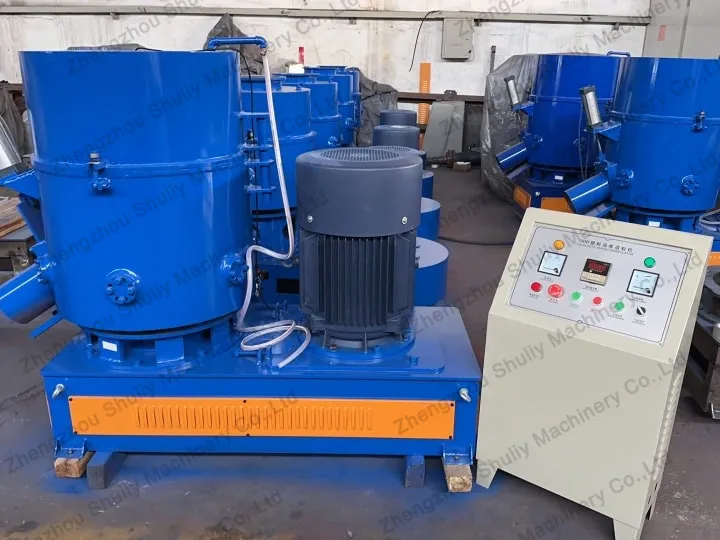
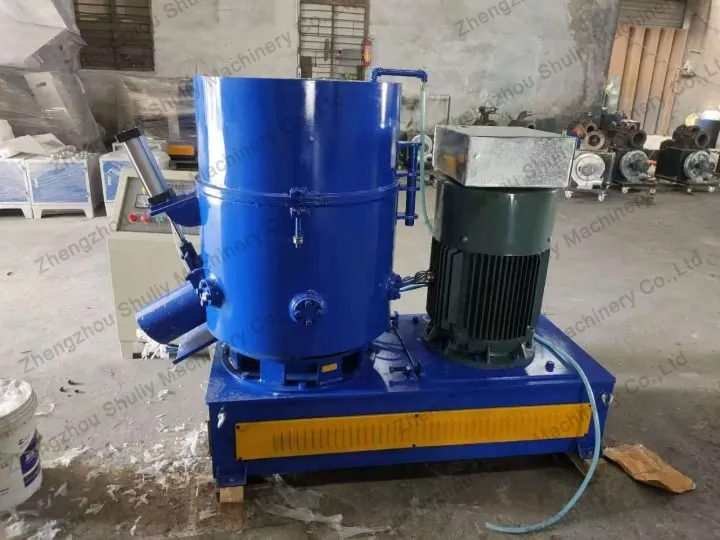
Why does the machine need friction heat?
Friction heat is an important part of plastic agglomeration.
Plastic film, bags, and similar materials are soft and lightweight. Simply crushing them does not significantly increase their bulk density or change their physical form.
Inside the plastic film agglomerator machine, high-speed cutting creates friction heat. The plastic softens and starts to adhere to itself. Controlled cooling then helps stabilize the material into small agglomerated pieces.
Therefore, the machine is not simply a plastic crusher. It combines size reduction and plastic agglomeration in one working chamber.
Why agglomerate plastic waste?
Loose plastic film, bags, fibers, and other soft plastic waste are often lightweight and bulky. Their low bulk density makes them less convenient to store, transport, and feed into subsequent recycling equipment.
यह plastic film agglomerator machine can reduce material into smaller and more compact plastic pieces. This can reduce the volume of the material and make it easier to handle during storage and transportation.
The agglomerated material can also provide a more consistent feedstock for further recycling processes, such as plastic extrusion and pelletizing. For plastic recycling operations, this makes the agglomerator a useful preparation step between waste collection and subsequent processing.
Start your plastic recycling today!
If you are planning to recycle plastic film, bags, woven bags, fibers, sheets, or similar materials, contact us immediately, and we will recommend a suitable plastic film agglomerator machine based on your production requirements.