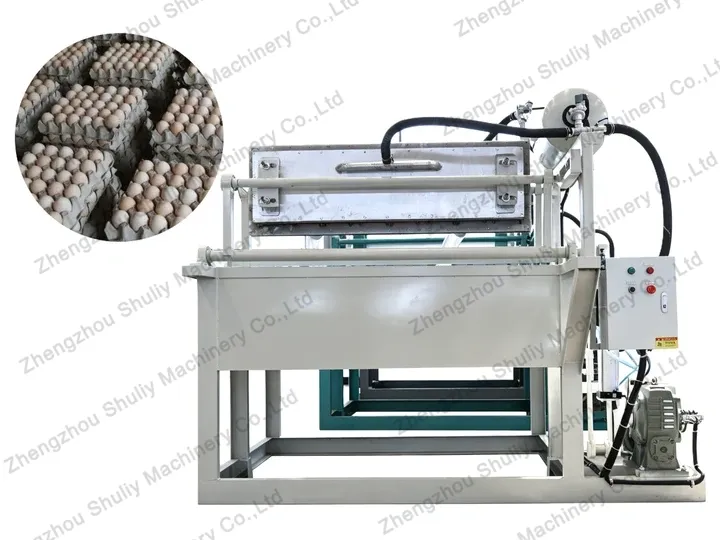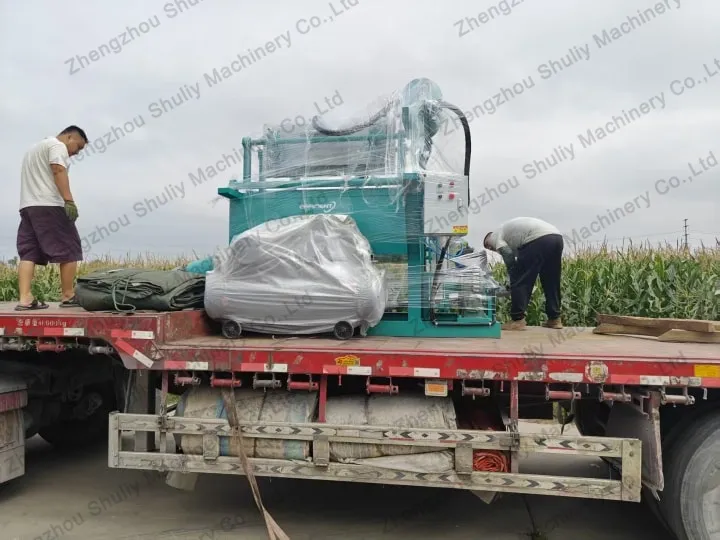
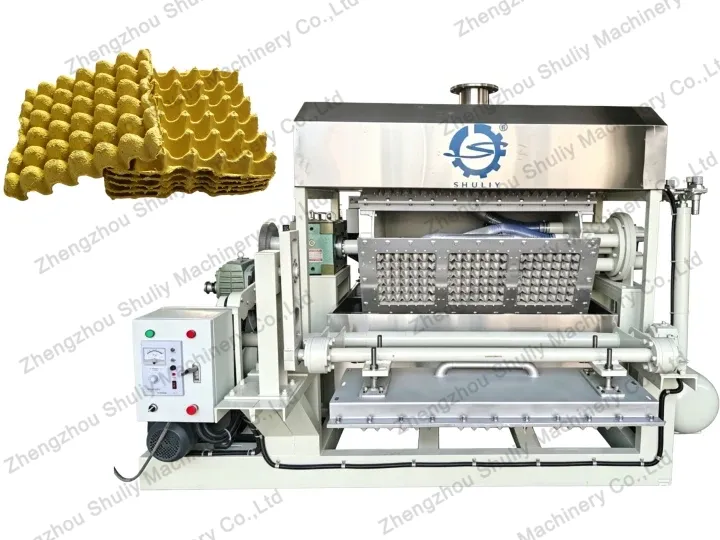
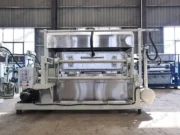
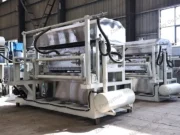
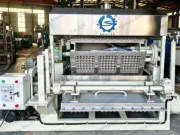
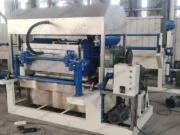
2500-7000pcs/h pulp egg tray machine
| Thương hiệu | Shuliy |
| Mẫu mã | SL-3*4, SL-4*4, SL-4*8, SL-5*8, SL-6*8 |
| Dung lượng | 2500-7000pcs/h |
| Công suất | 55-120KW |
| Điện áp | 380V, 50Hz |
| Paper consumption | 200-480kg/h |
| Water consumption | 400-960kg/h |
Bạn có thể hỏi các quản lý dự án của chúng tôi về chi tiết kỹ thuật
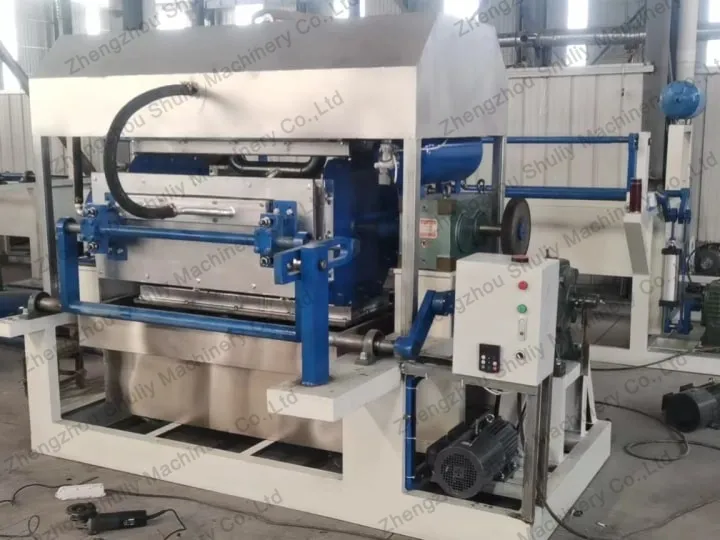
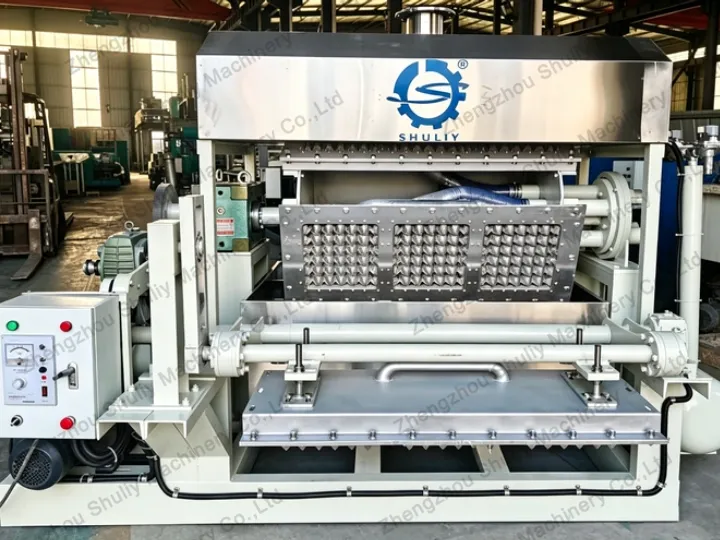
The pulp egg tray machine is a pulp molding machine that converts waste paper, cartons, and other recyclable paper materials into molded pulp packaging products. Besides standard egg trays, the same production principle can be used to manufacture wine bottle trays, fruit trays, coffee cup trays, and other customized paper pulp packaging by changing the molds.
With production capacities from 2,500 to 7,000 pieces per hour, the egg tray making machine can be configured for different product requirements, mold designs, and drying systems.
What are the advantages of egg tray machine?
- The forming principle remains the same when producing different products. By replacing the forming and transfer molds, the machine can adapt to different shapes and packaging requirements.
- The baffle inside the main pulp tank helps distribute the pulp more evenly toward the four corners of the tank. This helps improve the thickness consistency of the finished product.
- During pulp molding, excess water is removed through the pipelines and can flow back to the return-water tank. This helps reduce unnecessary water loss and supports water circulation within the production process.
- Our pulp egg tray machine can be combined with different drying methods according to production capacity and local conditions.
- The available models cover approximately 2,500–7,000 pieces per hour. Customers can select a machine according to their target output.
- Plastic molds are suitable for standard products such as 30-egg trays, while aluminum molds can be used for customized and irregular-shaped products. A plastic-and-aluminum combination mold is also available for specific production requirements.
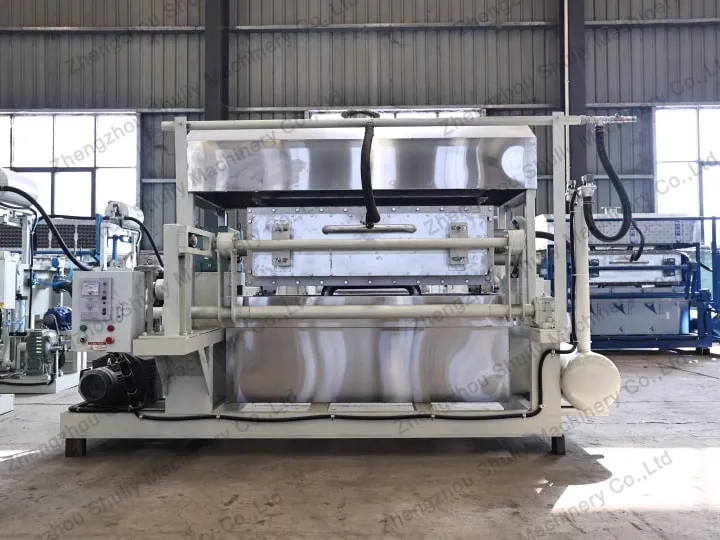
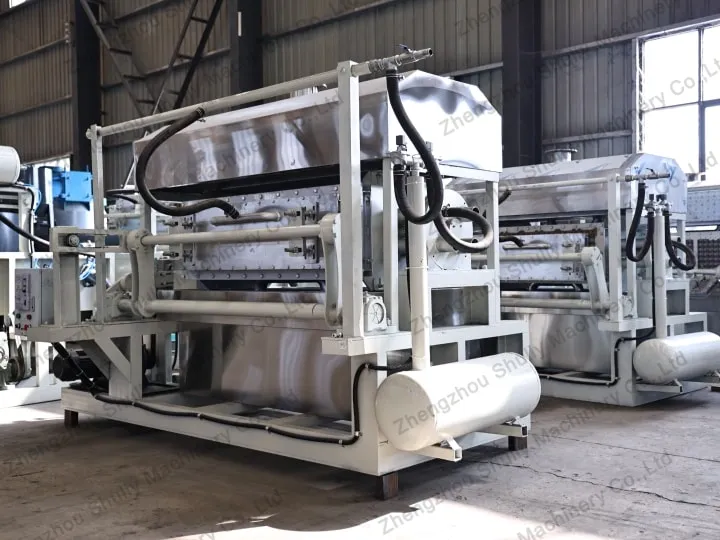
Pulp egg tray machine models and specifications
| Mẫu mã | Dung lượng | Công suất | Điện áp | Trọng lượng | Main Machine Size | Paper Consumption | Water Consumption |
|---|---|---|---|---|---|---|---|
| SL-3*4 | 2,500pcs/h | 55kW | 380V, 50Hz | 4,000kg | 2900 × 1800 × 1800 mm | 200kg/h | 400kg/h |
| SL-4*4 | 3,000pcs/h | 60kW | 380V, 50Hz | 4,800kg | 3250 × 1800 × 1800mm | 240kg/h | 480kg/h |
| SL-4*8 | 4,000\pcs/h | 95kW | 380V, 50Hz | 7,000kg | 3250 × 2300 × 2500mm | 320kg/h | 640kg/h |
| SL-5*8 | 5,000\pcs/h | 95kW | 380V, 50Hz | 8,000kg | 3700 × 2300 × 2500mm | 400kg/h | 800kg/h |
| SL-6*8 | 7,000\pcs/h | 120 kW | 380V, 50Hz | 10,000 kg | 3200 × 2300 × 2500 mm | 480kg/h | 960kg/h |
What can an egg tray making machine produce?
Although commonly called an egg tray machine, the equipment is not limited to egg packaging. It uses pulp molding technology, so different products can be produced by replacing the forming and transfer molds.
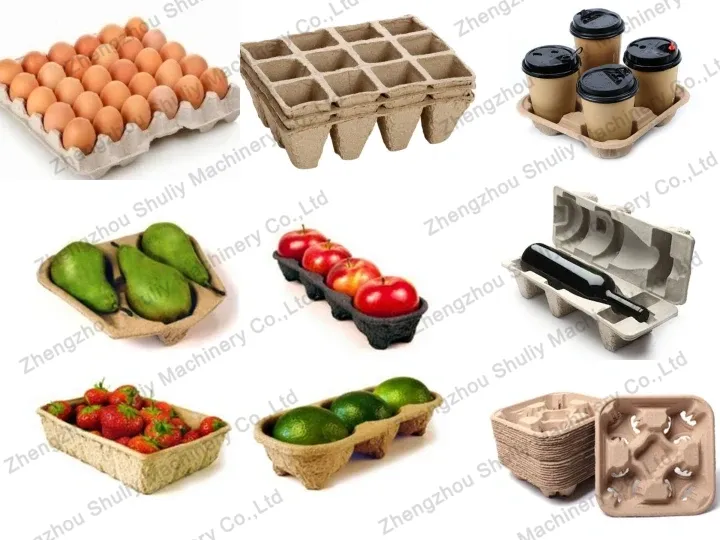
Typical products include:
| Sản phẩm | Typical Application |
|---|---|
| Egg trays | Packaging eggs for farms, wholesalers, supermarkets, and distributors |
| Wine bottle trays | Protecting wine and glass bottles during storage and transportation |
| Fruit trays | Separating and protecting apples, pears, peaches, and other fruits |
| Coffee cup trays | Holding and transporting takeaway coffee cups |
| Beverage trays | Packaging and separating bottles or cans |
| Industrial pulp trays | Protecting small parts, electronics, and other products |
| Customized molded pulp packaging | Designed according to the shape and size of specific products |
Working principle of egg tray forming machine
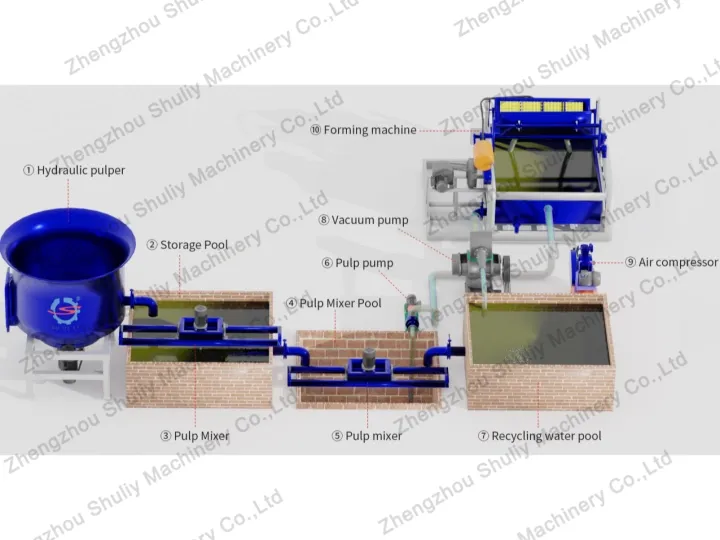
The pulp egg tray machine uses vacuum suction to draw prepared paper pulp onto the forming mold. The pulp takes the shape of the egg tray on the mold. After forming, air blowing transfers the wet egg tray to the transfer mold. Excess water is removed through the vacuum system and pipelines, then returned to the water tank.
Egg tray molds for pulp egg tray machine
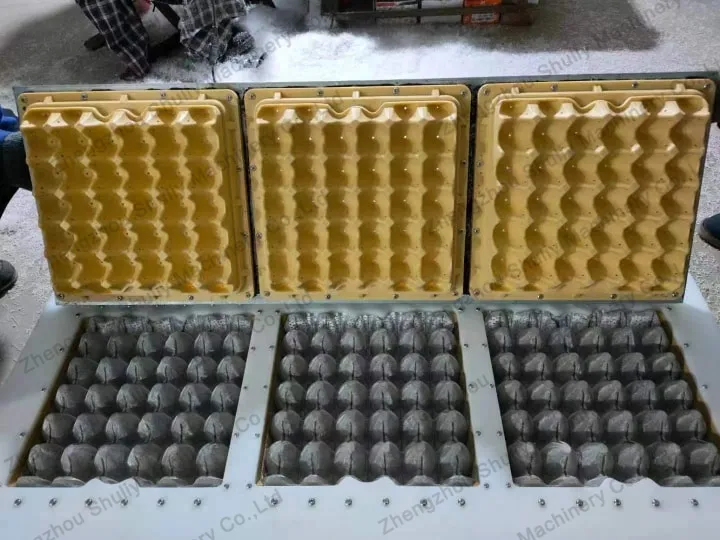
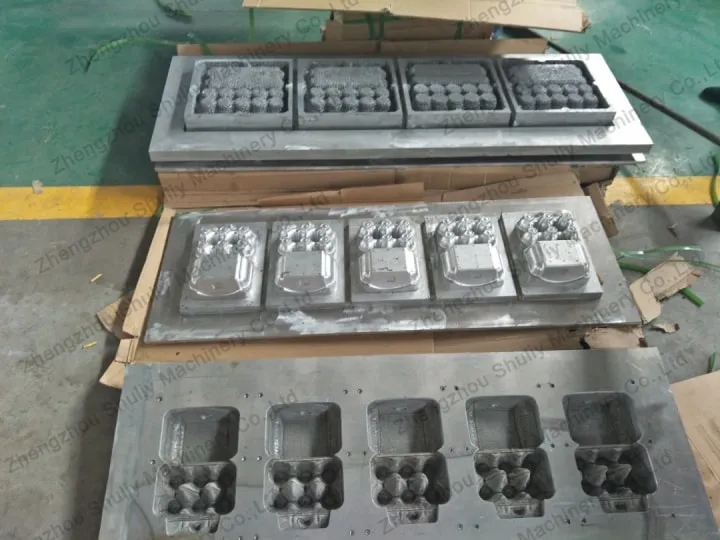
A complete mold set consists of an upper forming mold and a lower transfer mold. During production, the upper mold absorbs pulp and forms the product, while the lower mold receives the wet molded product during the transfer process.
Three mold configurations are available:
- Plastic mold: Plastic molds are commonly used for standard egg trays. Small holes are distributed across the mold surface and covered with stainless steel mesh.
- Aluminum mold: Aluminum molds are suitable for customized and irregular-shaped molded pulp products. For example, wine bottle holders, fruit packaging, coffee cup trays, and other protective packaging can be designed according to the customer’s product dimensions.
- Plastic and aluminum combination mold: The combination configuration uses a plastic forming mold and an aluminum transfer mold.
For a new project, the required product sample, dimensions, number of cavities, and production capacity should be confirmed before purchasing the pulp egg tray machine.
Choosing the drying system for molded pulp products
The pulp egg tray machine only produces wet pulp products, so a suitable drying system is required before the trays can be stacked, packaged, and transported.
- For smaller production, natural sun drying can reduce energy costs, although it requires more space and labor and depends heavily on local weather.
- A drying oven or trolley dryer provides a more controlled drying environment and is suitable for smaller commercial production where outdoor drying is difficult.
- For production above approximately 2,500 pieces per hour, a brick-kiln drying system can provide continuous drying.
- For higher-capacity production, a multi-layer metal dryer can reduce the floor space required for drying. A typical system uses multiple drying layers and can use coal, wood, natural gas, or diesel as the heating fuel.
The best drying system depends not only on output but also on local fuel prices, factory space, climate, labor availability, and the final molded pulp product.
Complete egg tray production line for sale
A complete egg tray production line has three main sections: pulping, forming, and drying.
- Pulping: Waste paper is mixed with water and processed into pulp. The pulp then passes through the storage tank and supply tank for further mixing and dilution.
- Forming: The prepared pulp enters the pulp egg tray machine. Vacuum suction forms the pulp on the mold to create wet egg trays.
- Drying: The wet trays are transferred to the drying section. Depending on the project, drying can be done with a drying box, brick kiln, or metal dryer.
FAQ about pulp egg tray machines
What products can an egg tray making machine produce?
The molded pulp egg tray machine can produce various molded pulp products, including egg trays, cup trays, fruit trays, wine bottle trays, and other paper pulp packaging. Different products require corresponding forming and transfer molds.
What is the standard size of a 30-egg tray?
A standard 30-egg tray is approximately 29.5 × 29.5 cm, with a tray depth of about 46mm. The mold can be designed according to the required egg size.
What egg diameters can the standard egg tray accommodate?
The pulp egg tray machine can produce egg trays suitable for different egg diameters, including approximately 43, 44, 45, 46, 48, 49, and 50 mm. Larger eggs of around 52 mm can also be accommodated with a suitable mold.
What is the pulp-to-water ratio for making egg trays?
The commonly used pulp-to-water ratio is approximately 1:10. The actual concentration can be adjusted according to the raw material, pulp condition, and required product thickness.
How much water does a freshly molded egg tray contain?
A freshly molded egg tray generally contains about 60–70% water.
How many egg trays can be produced from one ton of waste paper?
Approximately 12,000–15,000 egg trays can be produced from one ton of waste paper. The actual output depends mainly on the weight of each finished tray.
Can the egg trays be made in different colors?
Yes. Different pigments can be added to the pulp to produce colored egg trays or other molded pulp products. The color can be selected according to the customer’s packaging requirements.
How can I make the egg trays harder or stronger?
If a higher level of hardness is required, materials such as lime or bagasse can be added to the pulp according to the product requirements.
How long does an egg tray mold last?
An egg tray mold can generally be used for about 2 years under normal operating conditions. Its service life may be shorter if it is damaged by improper operation or other special circumstances.
Are there small-capacity egg tray machines available?
Yes. Our SL-3*1 egg tray forming machine has an output of 1,000 pieces per hour, making it suitable for small-scale production.
Looking for a pulp egg tray production solution?
Whether you are looking for a pulp egg tray machine for standard egg packaging or a complete egg tray production line. We can help you choose a suitable configuration. Contact us to discuss the right machine, mold, and production-line solution for your project